UX Playtest

UXIF 2026-04-24 Session 05:18 6 findings
# UX Playtest — UXIF

**Date:** 2026-04-24
**Session duration:** 5:18 (318s)
**Findings:** 6 (Sev 1: 1 · Sev 2: 3 · Sev 3: 2 · Sev 4: 0)
**Frameworks applied:** built-in (game-ux-heuristics.md)
**Recording:** RPReplay_Final1777065418.MP4
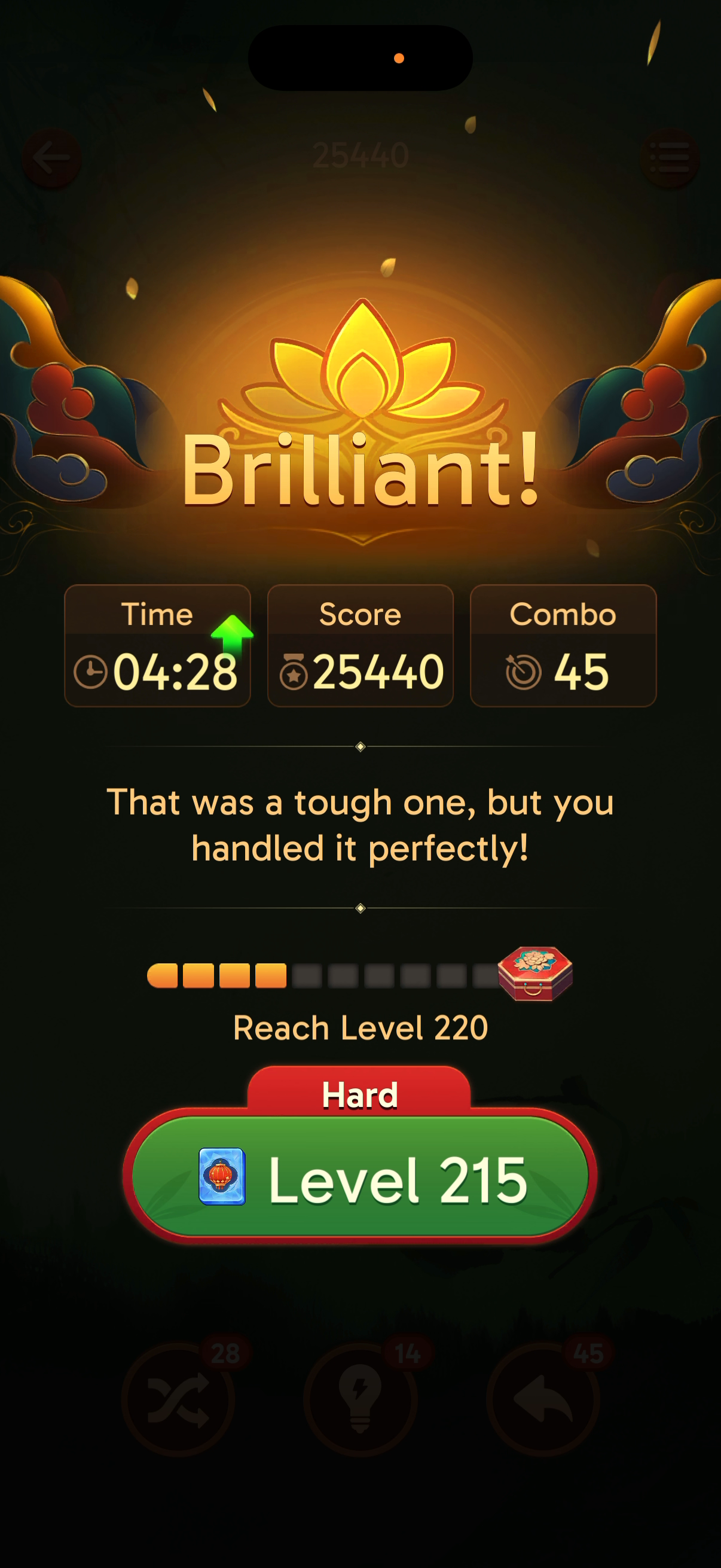
**Game observed:** A Mahjong-style triple-tile match game (3-tile slots at top, dense overlapping tile board, three persistent boosters: shuffle / hint / undo). Final card showed Level 215 "Hard", time 04:28, score 25,440, combo 45.

## Session summary

A returning, engaged player runs a single Hard-tier level (Level 215, ~4:28 to clear). They verbalize affection for the game ("one of my favorites"), confirm they've paid for the no-ads upgrade ("about $5, worth it"), and play confidently. The session is quiet on FTUE/onboarding signals (this is not a new player) and rich on **mid/late-game polish signals**: audio mix, booster legibility, stuck-state recovery, post-level dwell, and the persistent value of the no-ads purchase. The game's *visual* feedback is praised explicitly; the surrounding sensory and informational scaffolding around it has gaps.

Six findings below, ordered by timestamp. All are recoverable without changing the core mechanic.

built-in

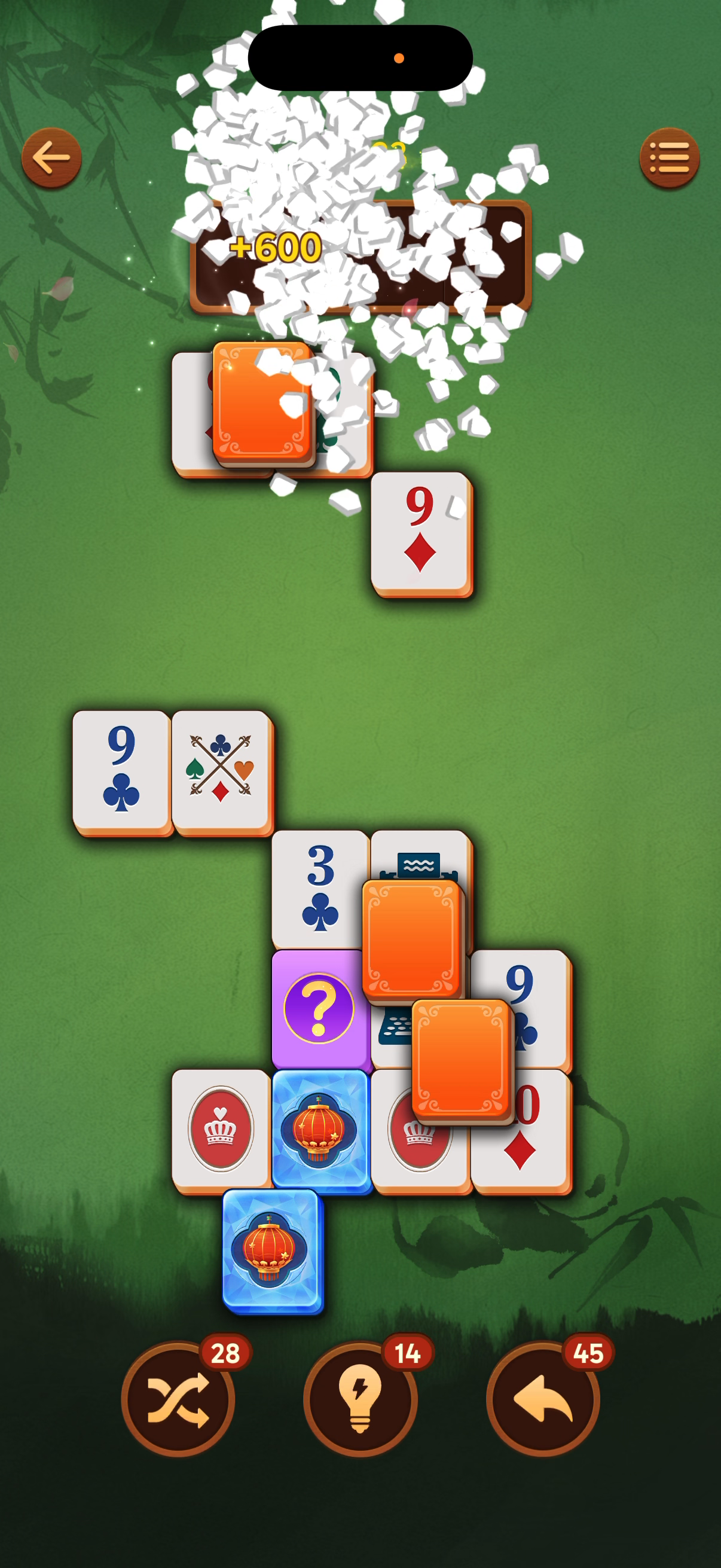
Minor 01:18 LOOP-03 — Juicy feedback built-in
Frame at 01:18

Observation

Player praises the explosion/clear effect ('Explosion is so good. It just feels so good') but immediately complains the audio mix is too quiet to deliver the satisfying punch the visuals promise. They check their phone settings looking for the cause ('Not sure why I'm not in this so low'). The visual fanfare lands; the audio side of the juice doesn't.

Explosion is so good. It just feels so good. Especially if you have a little optics and a little sound here, which is, again, a shame that I don't have. ... It's just gotta be a bunch louder. Not sure why I'm not in this so low.

Recommendation

Audit the in-game audio levels for clear/combo events — the SFX bus is sitting noticeably below where players expect for a tile-clear payoff. Consider: (a) raising clear/combo SFX +6–10dB relative to ambient, (b) adding a subtle sub-frequency thump for combo x5+, (c) layering haptic tap on every successful match (Core Haptics light → medium as combos build). The visual celebration is doing all the work right now; the audio/haptic legs of the feedback tripod are weak.
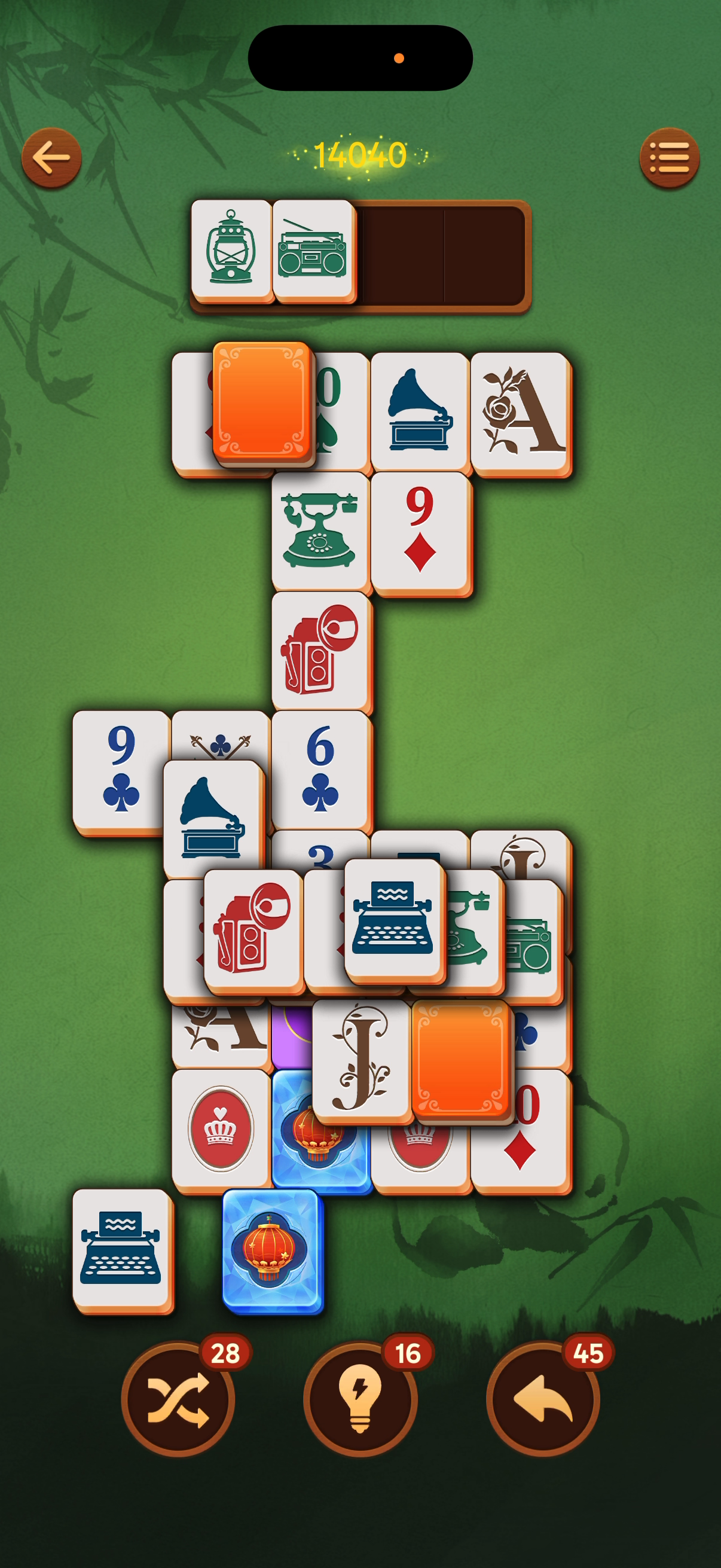
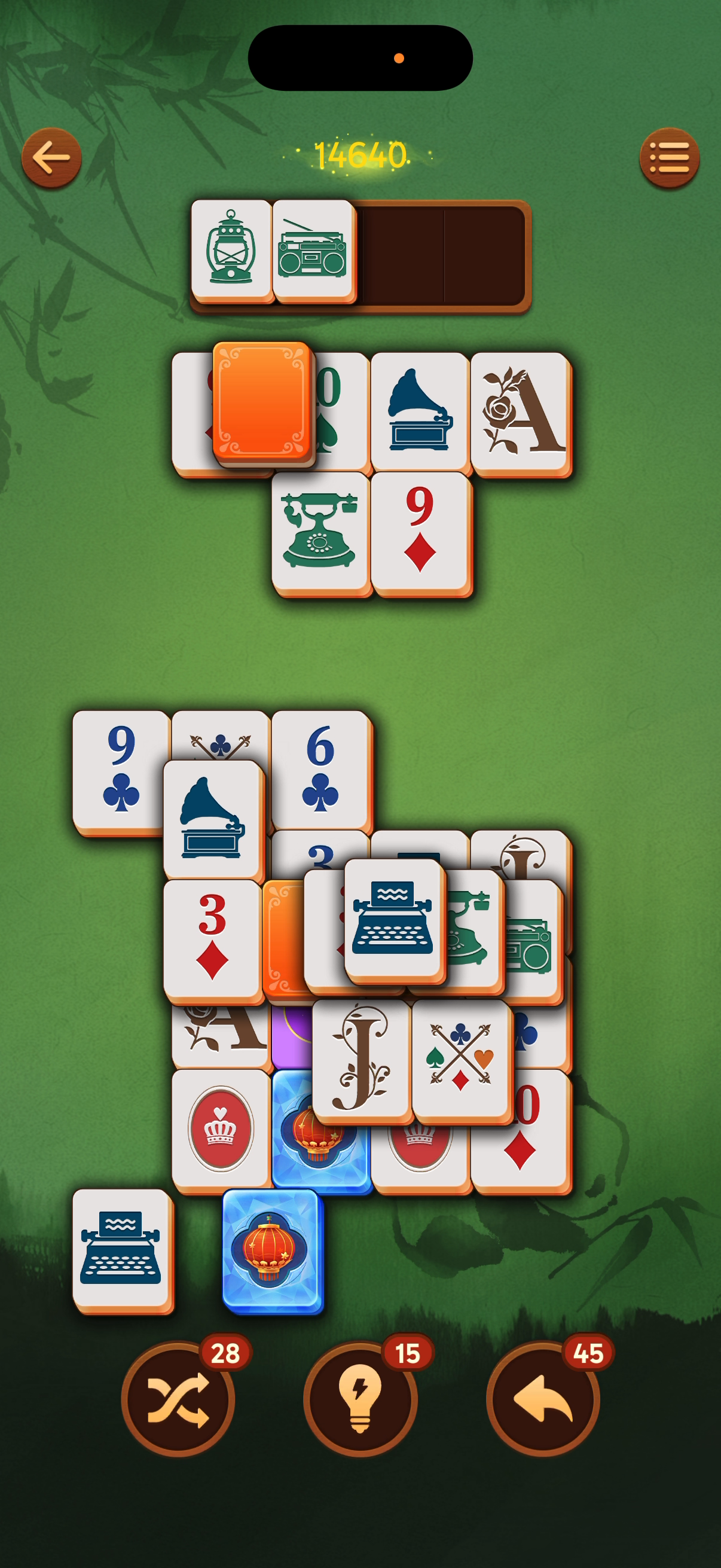
Minor 03:33 FB-02 — Consequence clarity / FTUE-02 — Teach by doing built-in
Frame at 03:33

Observation

Mid-session, the player questions their own use of one of the three persistent boosters (shuffle, hint, undo) — 'I don't know why I use these ventures.' This is a player who has clearly logged hours (they bought the no-ads upgrade and have 28/17/46 booster stockpiles), yet the moment-to-moment cost/benefit of each booster isn't legible enough for them to feel deliberate about spending one.

I don't know why I use these ventures.

Recommendation

Add a long-press preview on each booster button that surfaces (1) what it does in plain language, (2) how many you have, (3) when it's most useful ('Try shuffle when no matches are available'). For the first 2–3 uses of each booster, follow the tap with a brief callout ('Shuffled! 12 new matches available') so players learn to associate the booster with the value it delivered.

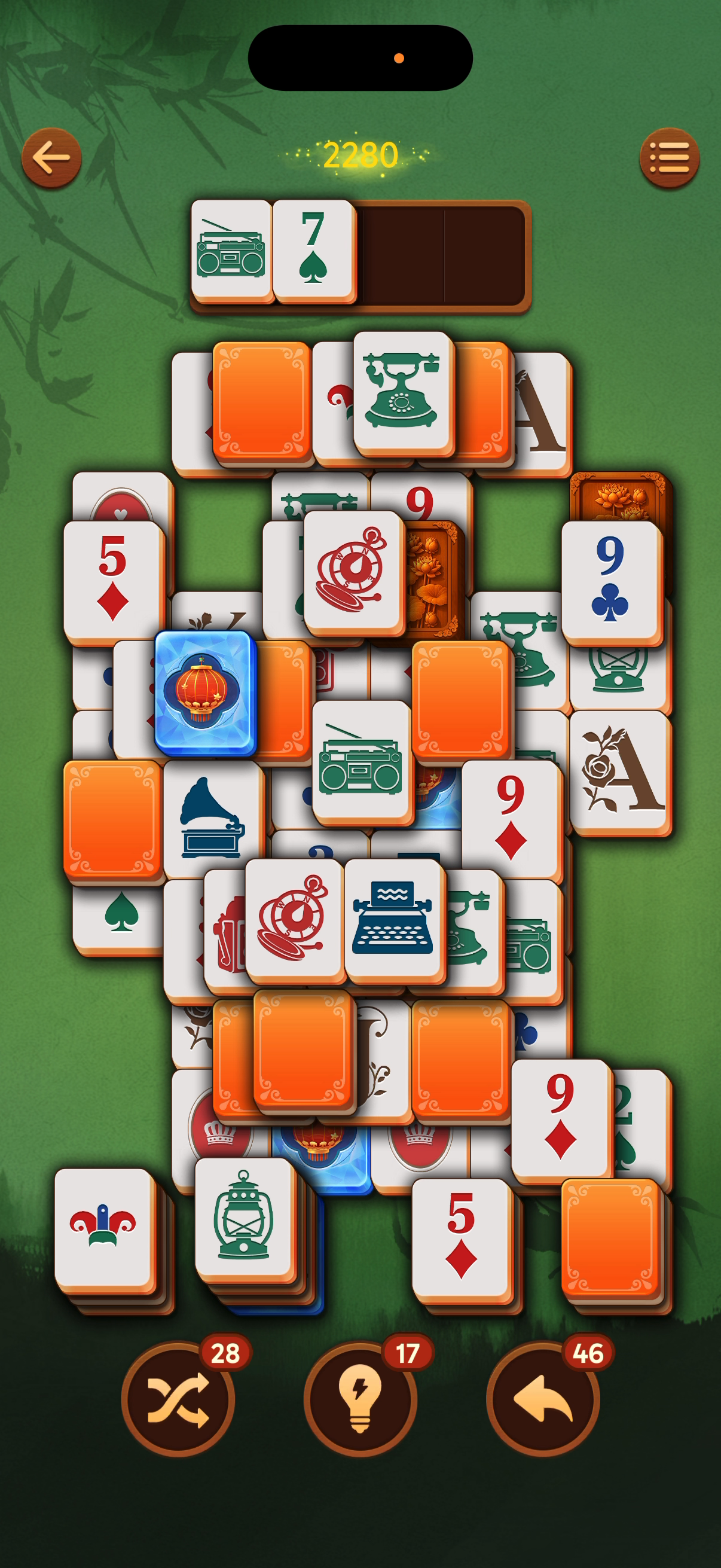
Major 04:02 LOOP-04 — Failure is informative / FB-01 — State is visible built-in
Frame at 04:02

Observation

The player hits a stuck state and verbalizes frustration ('I can't even move here. Unbelievable.'). The board has matchable tiles buried under others, but there's no visible signal of *why* they're stuck or what the recommended path forward is — the shuffle booster is the answer, but the game doesn't surface it as such. A frustrated experienced player here is a soft churn signal: hard levels feel unfair rather than challenging.

I can't even move here. ... Unbelievable.

Recommendation

Detect 'no available matches' state and proactively pulse the shuffle booster with a subtle 'Try shuffle?' tooltip. If the player has zero shuffles, surface the hint booster instead. The point isn't to remove difficulty — it's to convert opaque frustration ('this game is broken') into directed problem-solving ('I need to use a tool here').

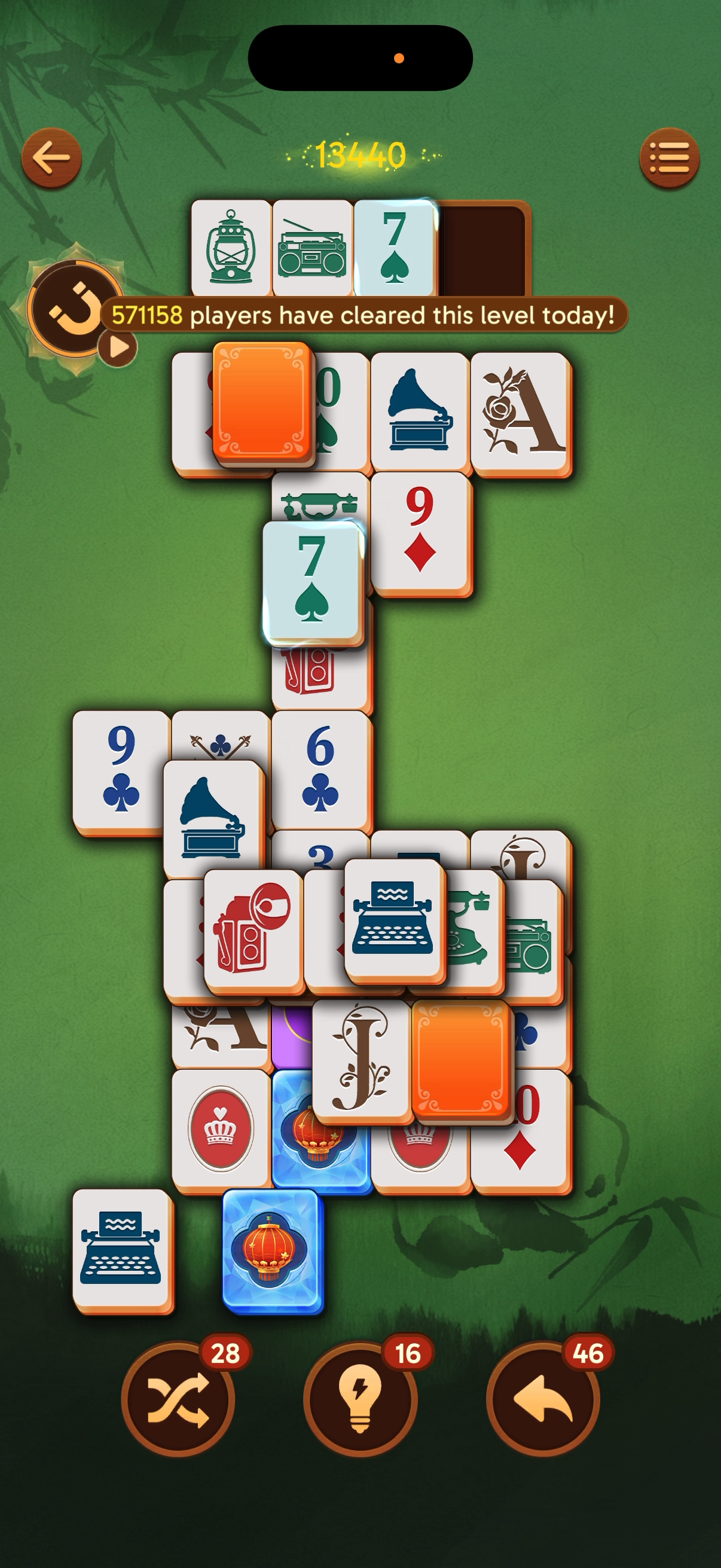
Cosmetic 03:27 MOB-02 — Touch target size / LOOP-02 — Input responsiveness built-in
Frame at 03:27

Observation

Player attempts a tap and audibly registers it as a miss ('Oh, I missed it. Oh.'). The tile grid is dense and overlapping — when tiles partially cover one another, the effective hit target on the foreground tile shrinks well below the ≥44pt iOS HIG threshold for a fingertip. One miss in five minutes isn't a crisis, but it's a recurring micro-friction that compounds over a session.

Oh, I missed it. Oh.

Recommendation

Expand the hit-test region of the topmost (fully-uncovered) tile slightly beyond its visible bounds — players target the visible tile, so the hit-region should match perception, not geometry. Pair this with a 'near-miss' affordance: if the tap lands within ~10pt of an unblocked tile, snap to it and flash a tiny highlight so the player learns the system is forgiving.

Major 05:03 FB-03 — Progress visibility / IA-01 — Findability of core systems built-in
Frame at 05:03

Observation

On the level-complete screen the player explicitly looks for a stats/replay surface and finds none: 'Through here as well, I can't go back and look at the stats or anything. I'm tapping around kind of. Um, I have to go to the next game. Which I get.' The 'Brilliant!' card shows time/score/combo for ~2 seconds, then funnels into the next level. For an engaged paying player, this is a missed retention hook — they want to dwell on the win, share it, or compare runs.

Through here as well, I can't go back and look at the stats or anything. I'm tapping around kind of. Um, I have to go to the next game.

Recommendation

Add a persistent 'Stats' or 'History' entry in the menu (top-right hamburger) that surfaces last 10 levels' time/score/combo, personal bests, and a per-day streak graph. On the level-complete card itself, make the stats panel tappable to expand into a detail view (combo timeline, % efficiency vs. par) before the 'Next level' CTA. This is cheap meta-progression that costs no design budget but rewards the player who is already telling you they want it.

Minor 04:27 MON-01 — Non-coercive prompting built-in
Frame at 04:27

Observation

The player has paid for the no-ads upgrade (mentioned at 0:18 — 'I did, in fact, through the no ads thing. It was like 5 bucks, but it still did worth it'). At 4:27 they verbalize a lingering anxiety as they approach a possible failure: 'Now I just better not get it. No ads.' This phrasing implies they still half-expect the game to surface a continue-with-rewarded-ad prompt on fail and aren't fully sure their purchase covers that case. Either it does and they're not confident, or it doesn't and the ad-replacement experience is still mildly coercive for paying users.

Now I just better not get it. No ads.

Recommendation

On the fail screen for no-ads purchasers, replace any rewarded-video slot with an unobtrusive 'Continue (free, premium perk)' button or simply omit the prompt. Add a tiny premium badge on the player's avatar/menu so the purchase feels persistently visible — purchases that disappear into the background lose their perceived value. Audit every interruption-style modal to confirm it respects no-ads purchase state.